.5f521cec.png "Trivas.ai")
Inside AI Wingman: How Claude Turns a Data Warehouse Into an Answer
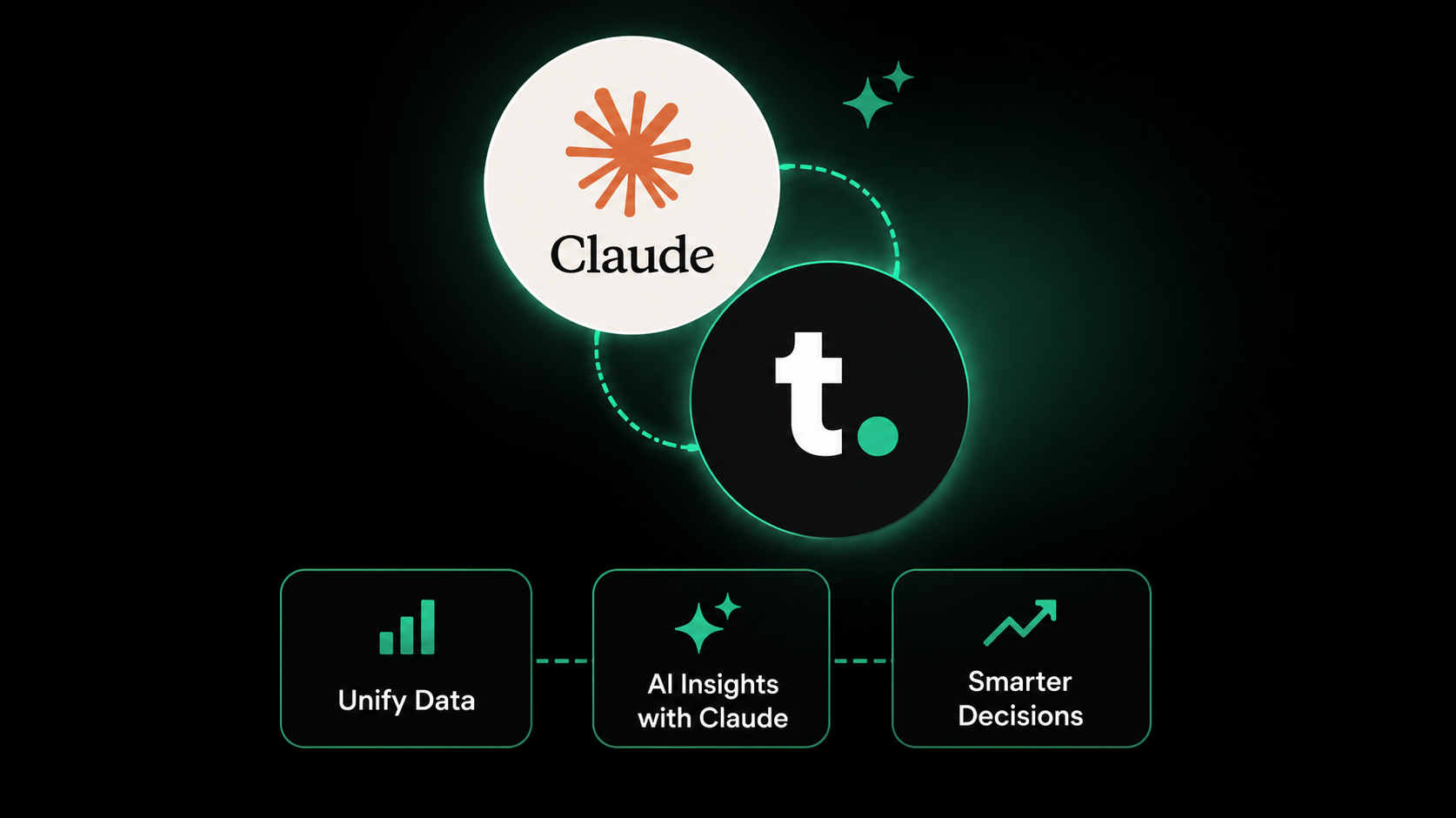
Most ecommerce tools stop at the dashboard: here are your numbers, good luck. Trivas.ai's AI Wingman goes a step further by putting Claude to work as a reasoning layer on top of unified Shopify, Amazon, and ad-platform data, reading what changed, explaining why in plain English, and suggesting what to do about it. This is a look at how that pipeline is built, why a reasoning-focused model like Claude fits the job better than a generic chatbot wrapper, and what it looked like in practice for two Trivas customers, Moira Beauty and CarCover.com.
Background
A unified dashboard solves the 'where is my data' problem. It does not solve the 'what does this mean' problem. Someone still has to open the dashboard, notice that a number moved, form a hypothesis about why, check that hypothesis against three other charts, and write it up before anyone acts on it. That step is where most teams actually lose their week, not in collecting the data, but in interpreting it. AI Wingman was built to remove that step, not by summarizing numbers into a paragraph, but by having Claude actually reason over the underlying data (cohorts, campaign-level spend, order-level revenue) the same way an analyst would, and surface the explanation instead of making a human reconstruct it.
Objective
The design goal for AI Wingman wasn't 'add a chatbot.' It was:
- Answer 'why' questions, not just 'what' questions: explain a metric move, don't just chart it
- Keep the model grounded in the actual underlying data so answers are checkable, not plausible-sounding guesses
- Make the interface plain-English so a founder or a CFO gets a straight answer without learning a query language
- Support more than one model (Claude, GPT, Gemini) so reasoning quality and cost can be tuned per task rather than locked to one vendor
Key Challenges
- Dashboards answer 'what,' not 'why' - a chart showing ROAS dropped 15% doesn't say whether that's a creative fatigue problem, a tracking problem, or a genuinely worse audience.
- Generic AI summaries hallucinate - a model that just paraphrases a dashboard without being grounded in the real query results will confidently invent explanations that sound right and aren't.
- Non-technical stakeholders get left out - if getting an answer requires writing SQL or waiting on an analyst, the founder or CMO ends up making the call on gut feel instead of data.
- Every customer's data shape is different - Moira Beauty's problem was reconciling five-plus platforms; CarCover.com's was reconciling eight separate Amazon seller accounts. A rigid, single-purpose script can't cover both.
Trivas's Approach & Solution
AI Wingman is built as three layers, with Claude doing the reasoning work in the middle one:
- Data layer: the Trivas Data Platform ingests and normalizes every channel (Shopify, Amazon, Meta, Google, TikTok, Klaviyo) into one consistent schema, so there's a single, queryable source of truth to reason over.
- Reasoning layer: this is where Claude comes in. Instead of summarizing a static report, it's given structured access to the underlying metrics and is prompted to explain a change: what moved, which segment or channel drove it, and how confident that explanation is, grounded in the real numbers rather than free-associating from a chart image.
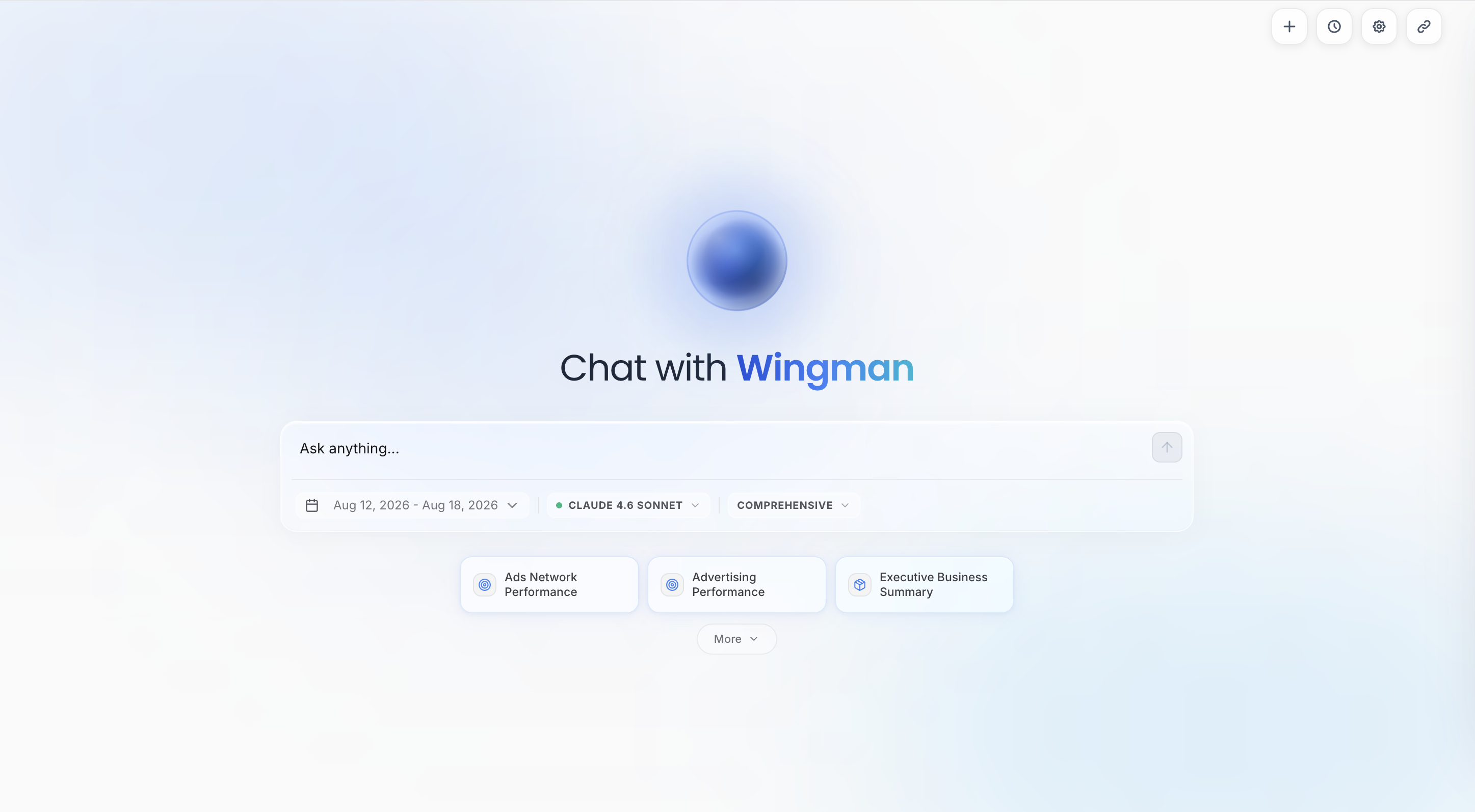
- Interface layer: the reasoning gets surfaced as a plain-English answer to a typed question ('why did revenue dip last week?') or as an automated alert when something worth flagging happens, so nobody has to know the underlying data model exists.
- Model flexibility: AI Wingman supports multiple models (Claude, GPT, Gemini) behind the same interface, so a task that needs careful multi-step reasoning over messy data can route to the model best suited for it rather than being locked into one vendor's trade-offs.
Results (measured outcomes)
- Moira Beauty: went from manually cross-referencing five-plus dashboards to asking AI Wingman directly why a metric moved, cutting a multi-hour weekly investigation down to a single query.
- Moira Beauty: +22% incremental revenue and blended ROAS improved from 1.2x to 1.9x within 90 days, with launch and promo performance now explained automatically instead of debated in a meeting.
- CarCover.com: 8 separate Amazon seller accounts unified into one dashboard that AI Wingman can reason across, instead of someone manually reconciling eight exports by hand.
- CarCover.com: weekly manual reporting replaced with on-demand, plain-English answers. The reporting bottleneck didn't get faster, it got removed.