How Do Ecommerce Brands Use AI for Budget Decisions?
by Om Rathod
|
6 min read
Sep 02, 2026
How Do Ecommerce Brands Use AI for Budget Decisions?
AI pulls spend and performance data from ad platforms, Shopify or Amazon, and GA4 into one place, then flags where budget is under or overperforming so teams can shift spend without waiting on a Friday report. That's the short version of how do ecommerce brands use AI for budget decisions in practice.
Three use cases show up over and over: channel-level ad spend reallocation, inventory or COGS-aware budgeting, and forward-looking spend forecasting. Each gets its own section below.
This is written as a direct-answer FAQ page. Skip around, each section stands on its own.
What Kinds of Budget Decisions Can AI Actually Help With?
Start with the most common one: shifting daily or weekly ad budget between Meta, Google, and Amazon Ads based on blended ROAS, not whatever number each platform reports on its own dashboard. Platform-reported ROAS is basically marketing for the platform. Blended ROAS tells you what actually happened.
Then there's inventory-linked budgeting. Pull back spend on SKUs running low on stock or where COGS has crept up. Push spend toward the high-margin bestsellers that still have inventory to sell. This is the kind of call that gets missed constantly because ad platforms and inventory systems don't talk to each other by default.
Seasonal and promotional planning is the third bucket: using last year's BFCM or Prime Day data to set spend ceilings before the event starts, instead of reacting mid-week when CPMs spike.
Worth being clear on one thing: AI answers "where" and "how much." A founder or marketing lead still decides "why," based on brand priorities the model doesn't know about. More on that later.
How Does AI Analyze Ad Spend Across Channels Like Meta, Google, and Amazon?
The mechanic is unification. Meta reports ROAS. Google reports CPC. Amazon reports ACOS. None of those numbers are directly comparable on their own, so the AI layer normalizes them into one blended view, typically built on top of a data warehouse like Redshift instead of you tabbing between three dashboards trying to eyeball it.
Here's a concrete version of the problem: a brand spending $50k a month split across Meta, Google, and Amazon Ads genuinely cannot tell true incremental ROAS from platform-attributed ROAS until that spend is blended in one place. Each platform takes credit for the same conversion. Add up the platform numbers and you'll think you spent your budget more efficiently than you did.
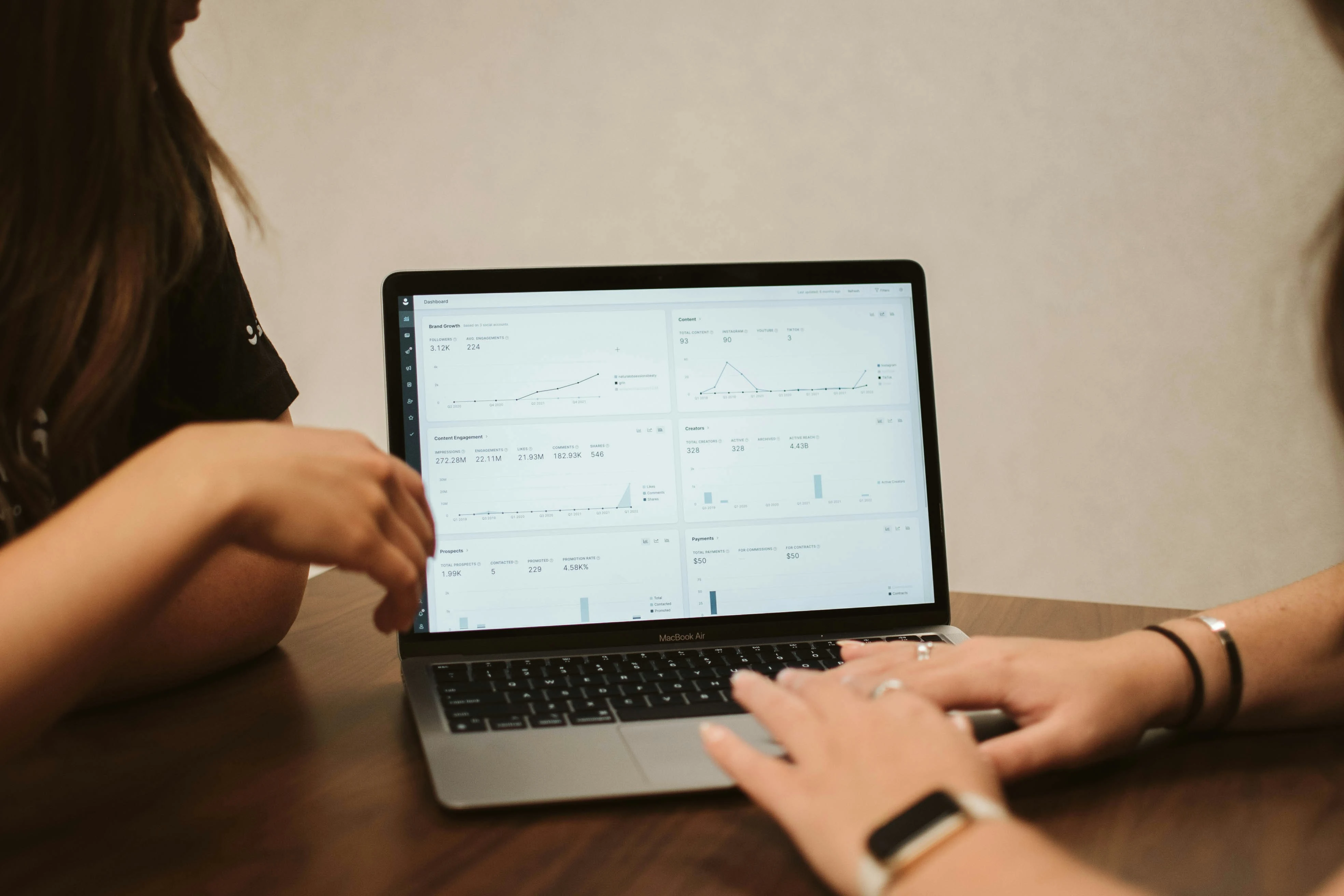
This is where an insights layer like Trivas's Wingman AI does the actual surfacing, catching a channel drifting into inefficiency before someone has to build a pivot table to find it. The AI product is built specifically to sit on top of that blended data and flag the shift, rather than requiring someone to go looking for it.
Can AI Predict Future Budget Needs Before They Happen?
Yes. Forecasting models trained on historical spend, seasonality, and conversion trends can project next month's or next quarter's budget needs by channel, not just report on what already happened.
A practical example: simulating what happens to CAC and revenue if a brand shifts 20% of Meta spend to TikTok, before a single dollar actually moves. That's the difference between guessing and testing on paper first. Get the simulation wrong and you've lost nothing. Get the live reallocation wrong and you've burned a week of spend finding out.
Worth separating two things people tend to lump together: forecasting is predictive, reporting is historical. They're different functions working together, not the same feature with two names. Forecasting and simulation tools handle the "what if" question. Reporting dashboards handle "what happened." A brand making real budget decisions needs both, not one standing in for the other.
How Do AI Insights Differ from Manual Spreadsheet Analysis?
Time is the obvious gap. Pulling and reconciling multi-platform ad data by hand, exporting from Meta, Google, Amazon, and Shopify, then stitching it together in a spreadsheet, routinely eats 3+ hours a week. Automated in a dashboard, that same view takes a few minutes to check.
Accuracy is the less obvious gap, and honestly the more important one. A manual spreadsheet is stale the moment an ad platform updates its own attribution window, which happens more often than most teams realize. Automated pipelines refresh on a schedule, so the numbers you're looking at Monday morning reflect Monday morning, not whatever the export looked like last Wednesday.
And there's a practical ceiling on what manual analysis catches. A person will notice a campaign that's obviously bleeding money. What gets missed is the slow, compounding stuff: a handful of SKUs each losing a few points of margin, a handful of campaigns each drifting a little less efficient. None of them loud enough to notice alone. Add them up across dozens of SKUs or campaigns and it's real money. That's exactly the pattern AI flags automatically, because it's not scanning for the obvious, it's scanning everything.
What Data Do Ecommerce Brands Need Before AI Can Make Budget Recommendations?
Three data sources, minimum. Ad platform spend and conversion data from Meta, Google, and Amazon Ads. Store-side revenue and order data from Shopify or Amazon. And GA4 funnel data to see what's happening on-site between the click and the purchase.
Fragmented data produces fragmented recommendations. If those three sources are living in separate spreadsheets pulled on separate days, the AI is working from a partial, slightly-out-of-sync picture. Garbage in, garbage out applies directly to budget forecasting, maybe more than anywhere else, because a bad forecast doesn't just look wrong, it gets acted on.
The part brands consistently underestimate isn't the AI model itself, it's the integration setup. Getting ad platforms, store data, and GA4 actually connected and reconciled is the real work. This is also exactly why teams evaluating founder and CEO tools should ask a vendor how integration actually happens before asking about the model behind the recommendations. The model is the easy part.
Do Ecommerce Brands Still Need Human Oversight for AI Budget Decisions?
Yes, and anyone telling you otherwise is selling something. AI narrows down where to look and recommends allocation changes. Final budget approval should still sit with a founder or marketing lead who understands the brand-level tradeoffs the model can't see.
Here's a clean example of where AI alone fails: it has no way to account for a founder deciding to run a loss-leader promotion purely for brand awareness or a PR moment. The model sees a promotion tanking short-term ROAS and will flag it as a problem, because numerically, it is one. It just isn't the whole story.
Think of AI as a decision-support layer, not an autopilot. That distinction matters most exactly where the stakes are highest, budget-sized decisions with real cash consequences, which is the whole subject of this page.
Getting Started with AI-Driven Budget Decisions
Start with the connections, not the model. Get ad platforms, store data, and GA4 feeding into one dashboard first. Skip that step and no amount of AI polish on top will produce recommendations worth trusting.
Once that foundation is in place, tools like insights and forecasting can start doing the work this whole page has been describing: surfacing where budget is misallocated and projecting what a shift would do before you make it.
If you're weighing whether this is worth setting up now or later, it's worth reading a bit more or talking it through with someone who's seen the setup work (and not work) at other brands. No pressure either way, just have a look at what's actually involved before you decide.
Revenue growth leader and co-founder driving Trivas's commercial strategy. Om has led the product vision and execution from scratch. With a strong background in SaaS sales and GTM strategy, Om bridges product innovation with real-world customer needs.
Continue Reading
explore more insights
Ecommerce Analytics With Margin-Aware ROAS: Stop Optimizing Toward Losses
.d53b12e5.png&w=3840&q=75 "Trivas.ai")